
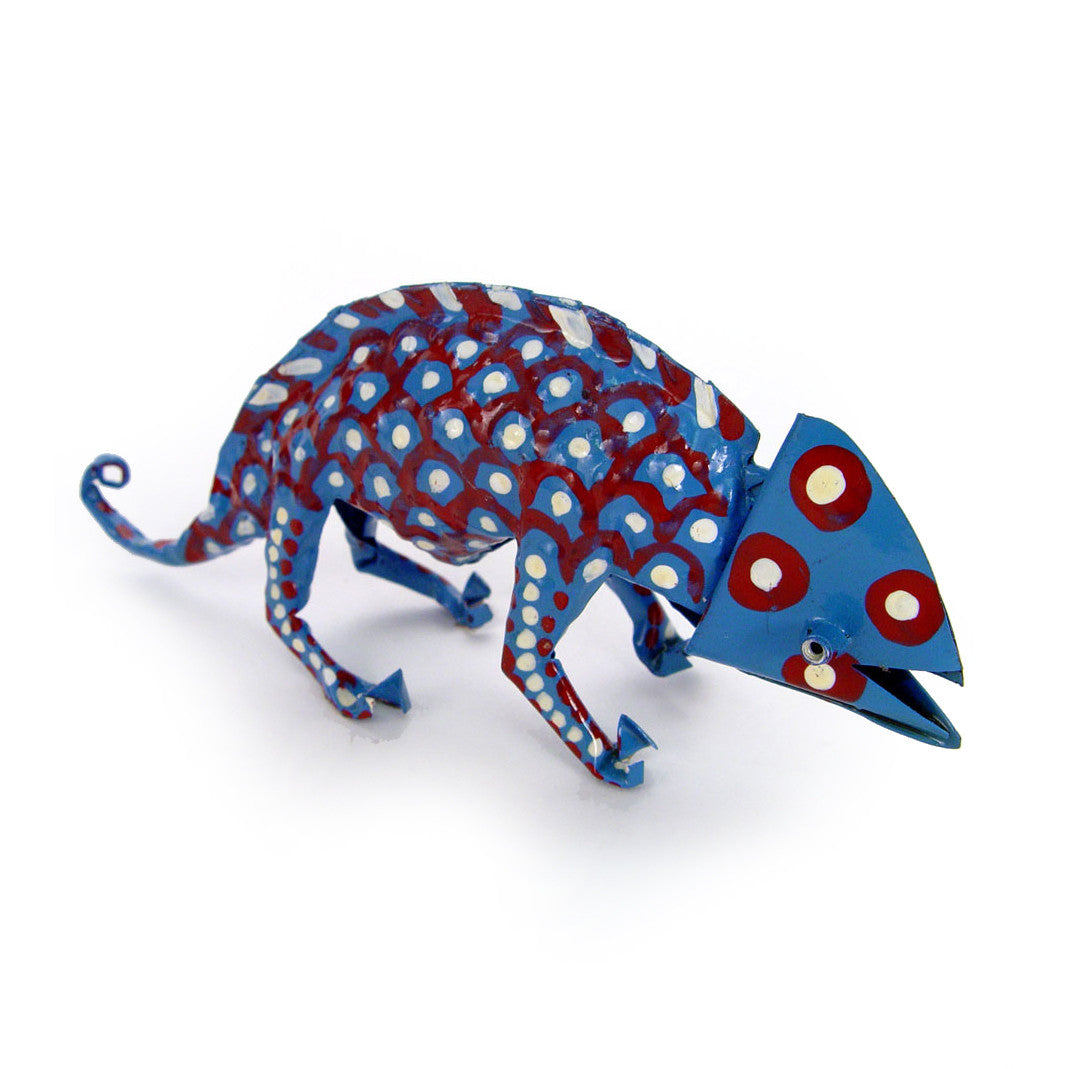
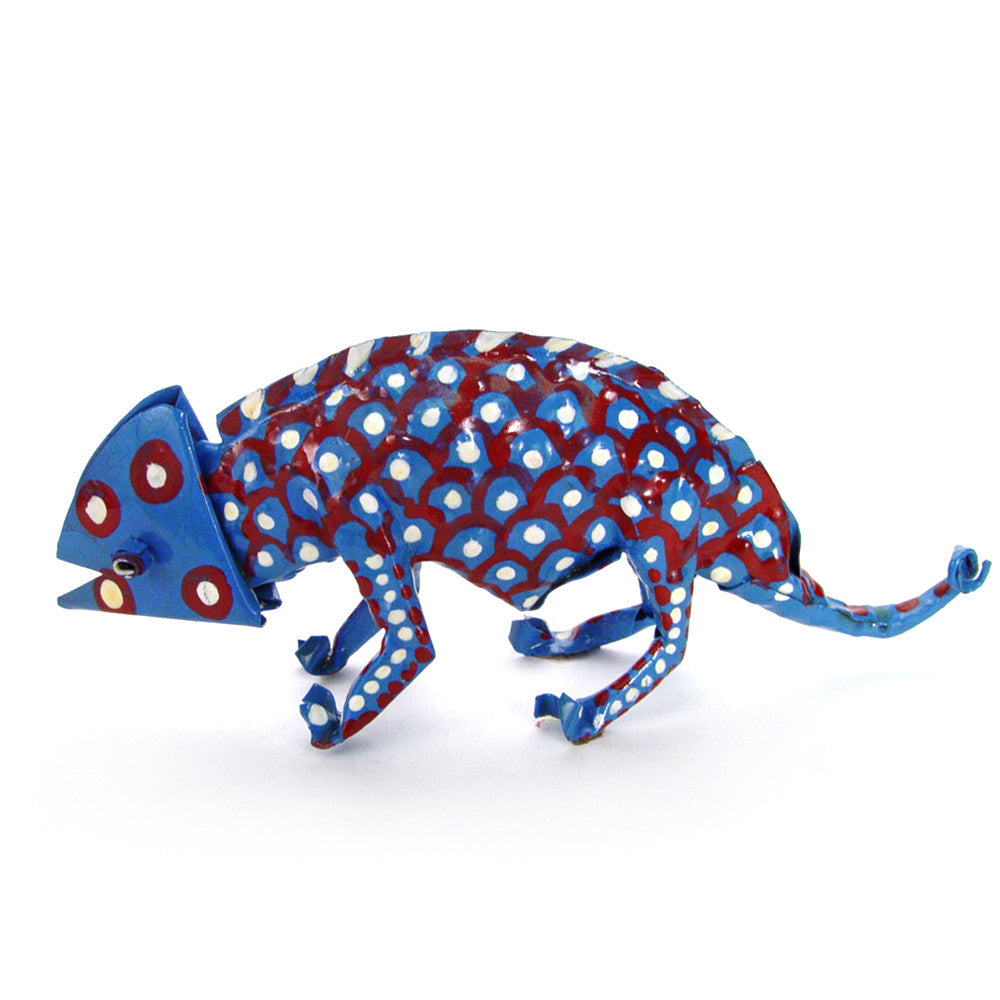
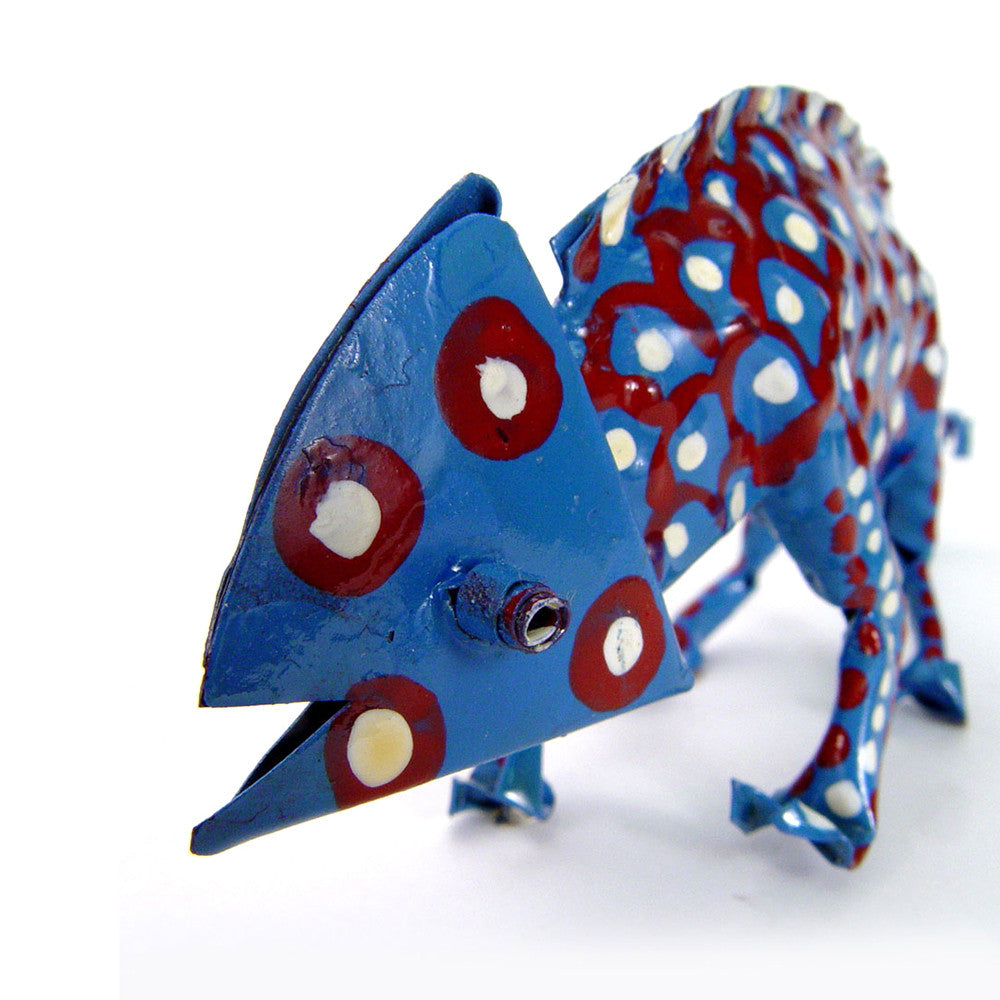
Tiny Tin Chameleon
The chameleon symbolizes use of color as camouflage, survival, patience, and using the sun as a source of power. Due to its ability to change color in order to blend in with its environment, the chameleon is a common symbol of transformation. According to the beliefs of the Senufo people of Ivory Coast a chameleon is one of the five animals present at the creation of the world. Many tribes of Democratic Republic of Congo (f. Zaire) regard a chameleon as a god, who can appear in different aspects of life and always shows his knowledge and great wisdom. Old tin cans and other scraps of metal from businesses in the industrial area of Harare are turned into these delightful sculptures by these artists using snips, pliers, and hammers.
Height: 2.5"
Length: 4.5"
Width: 2"
Artist: Joseph Thomas, painted by Yeukai Tanyara
Made In: Zimbabwe
.
Material
Recycled old tin cans
Dimension
See product description
Product Care Instructions
Wipe clean with a dry cloth
Origin
Zimbabwe
Time to make
4 hours
Choose options
meet the maker
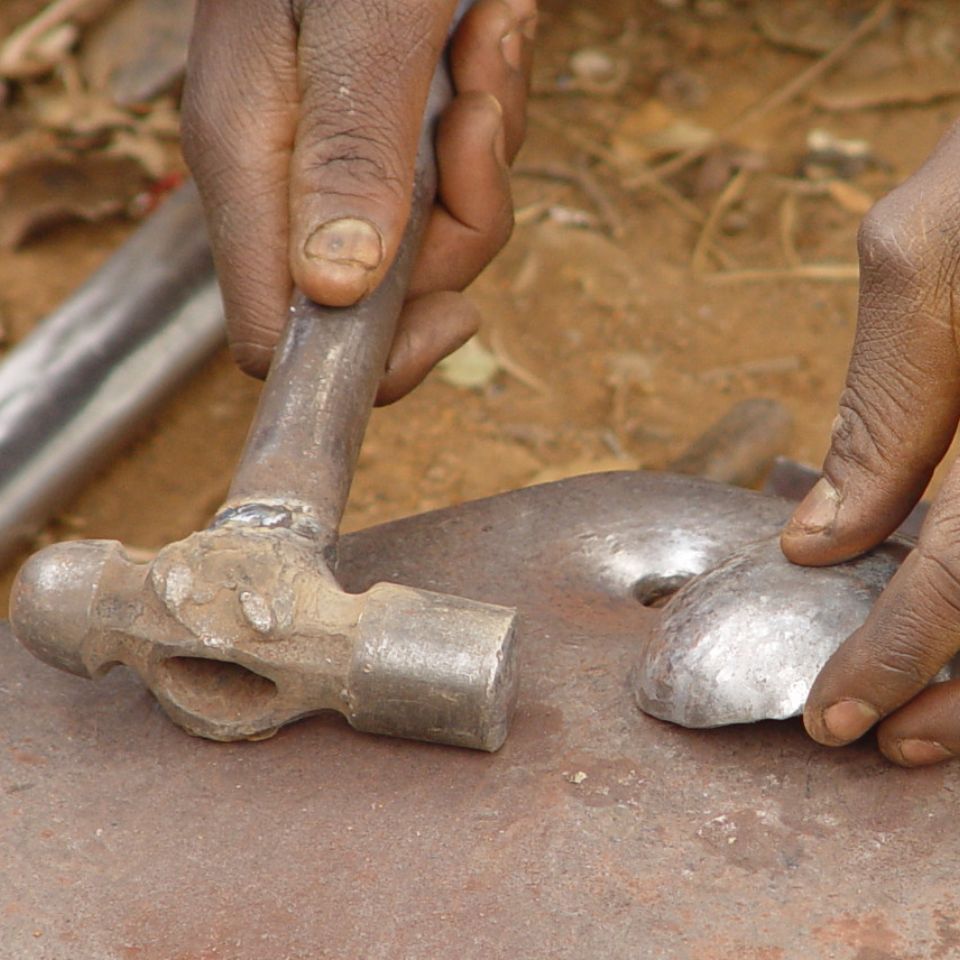
Metal Sculptors of Zimbabwe
📍Harare, Zimbabwe
" A remarkable story of creativity, resilience, and generational craftsmanship"
